*Exhibited at Clore Gallery, Jerusalem
Nimrod 2.4
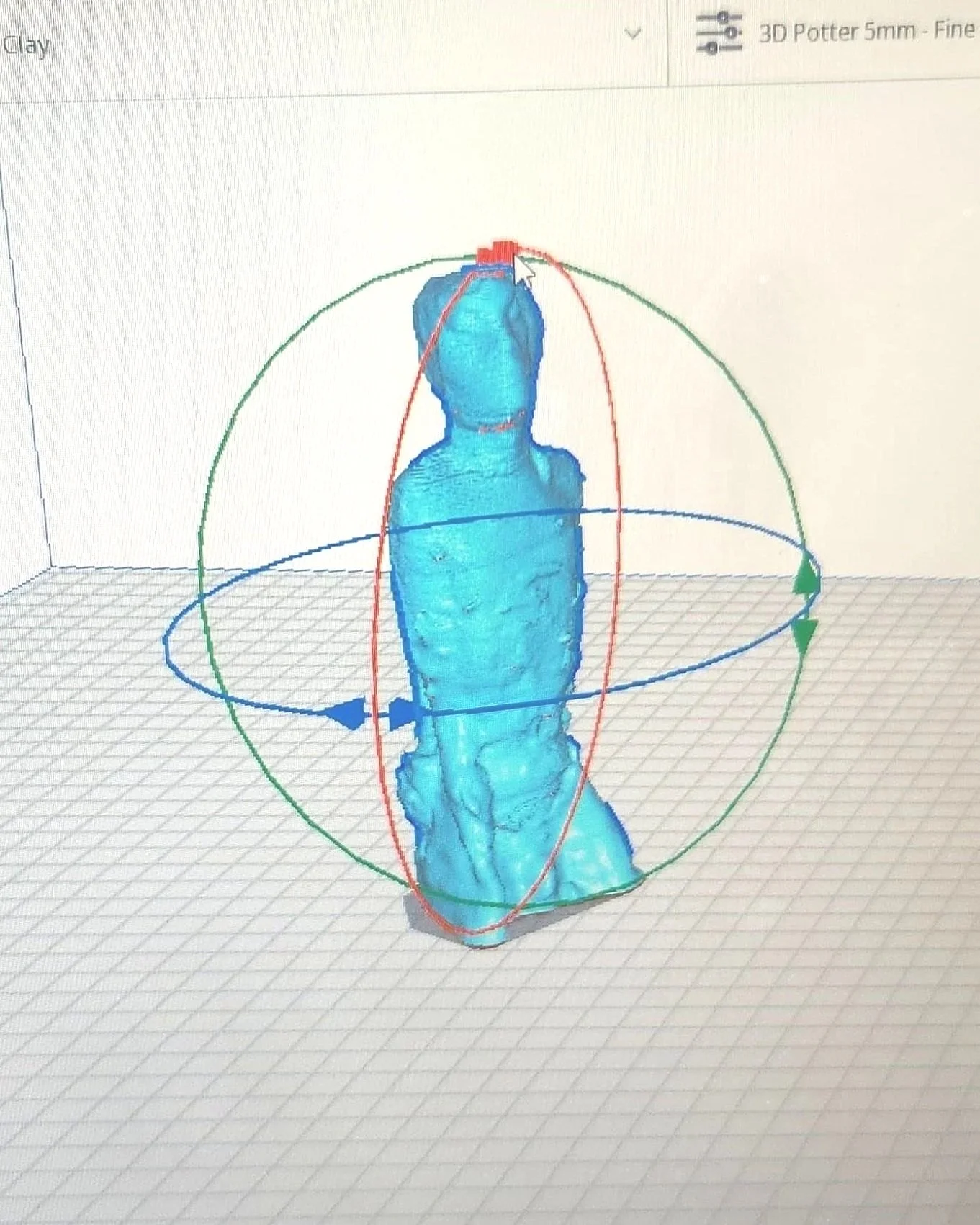
Nimrod 2.4 begins with a scan. The original sculpture was loaded, edited, printed in clay, fired in a kiln - then scanned again. Each cycle of reproduction loses resolution. Each loss opens distance from the source. By the fourth iteration, the object has drifted into the uncanny space it was always meant to inhabit: familiar enough to recognize, strange enough to question.
The clay and Nubian sandstone, substances tied to the region's archaeological body - sit beside the myth of the original piece. What erodes through repetition is not just form but certainty: about origins, about preservation, about what it means to copy something sacred. If a history can be reproduced, can it also be reimagined?
Feel free to touch it.
Informed by Hito Steyerl's In Defence of the Poor Image - the degraded copy as carrier of meaning, not failure of it. Each compression, each lost polygon, each fired distortion is a record of passage. The sculpture doesn't mourn its resolution. It wears it.